Why Music and Movies Are Such Powerful Partners
There are some movie moments we remember as much for what we heard as for what we saw.
A song begins, a familiar melody returns, or the score changes almost imperceptibly and suddenly a scene feels different. Music can make a moment more joyful, more melancholy, more romantic or more unsettling. Sometimes it tells us something about a character that the dialogue simply couldn’t.
That relationship between music and storytelling is at the heart of ALMOST WITH YOU, a romantic drama set against the extraordinary landscape of Albany, Western Australia. This isn’t simply a movie that happens to have a soundtrack. Music is woven into the story itself.
Why does music have such power in movies?
Cinema communicates with us on several levels at once. We watch the actors and landscapes, follow the dialogue and story, and at the same time absorb a musical language that can influence how we interpret what we are seeing.
A melody can create anticipation before anything happens on screen. It can remind us of an earlier moment in the story. It can make an otherwise ordinary scene unexpectedly moving. And sometimes the most effective music does very little at all.
Rather than telling the audience what to feel, a subtle score can create space around a performance. A few notes can reinforce loneliness, uncertainty or hope without overwhelming the actors or the story.
This is particularly important in intimate, character-driven films such as ALMOST WITH YOU, where much of the story is about connection, grief, memory and finding a way forward.
When the songs become part of the story
In ALMOST WITH YOU, music isn’t simply added to create atmosphere.
The central character, Brendan Kelly, is an Irish singer-songwriter nearing the end of an Australian tour. He arrives in Albany with an unexpected five days off before his final show. Still dealing with the recent death of his brother, Brendan is carrying a grief that has affected not only his life, but also his relationship with his music.
That makes the songs much more than a soundtrack.They are part of who Brendan is.
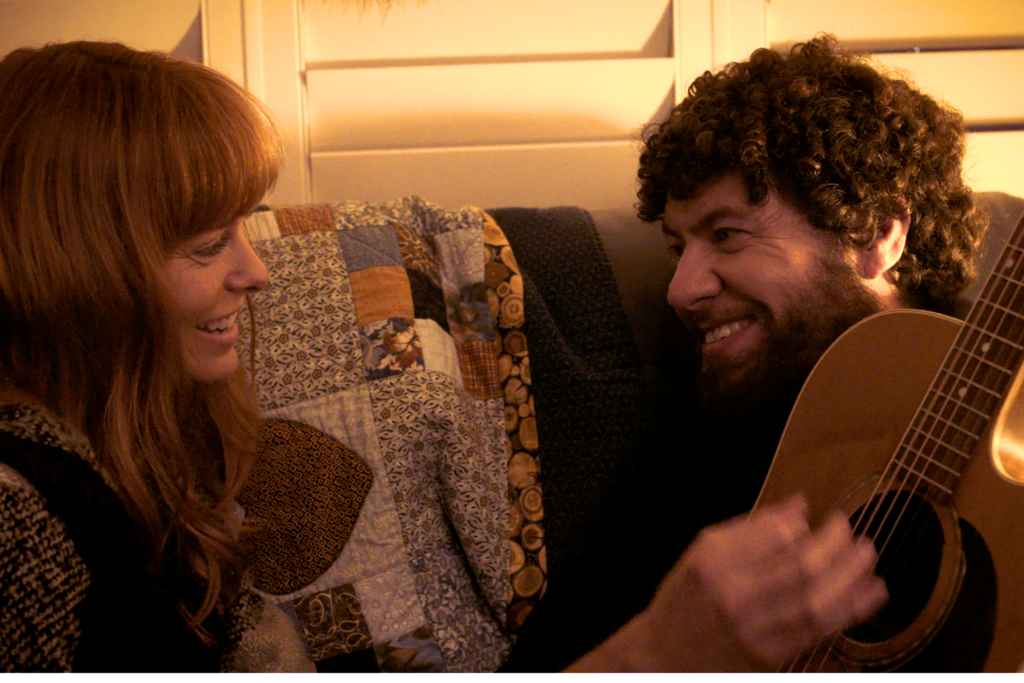
As his time in Albany unfolds, and particularly through his relationship with Sarah and his encounters with the local community, music becomes one of the ways the film explores what Brendan has lost and what he may still be able to rediscover. Moments within the film where Brendan plays Sarah’s song on the couch and they end up both singing together and Stephen Pigram’s rendition of his beautiful Every Song, a bonding moment for Brendan, all add to the tapestry of this film.
There are emotions that characters don’t necessarily need to explain when a song has already taken us there.
The songs of Declan O’Rourke
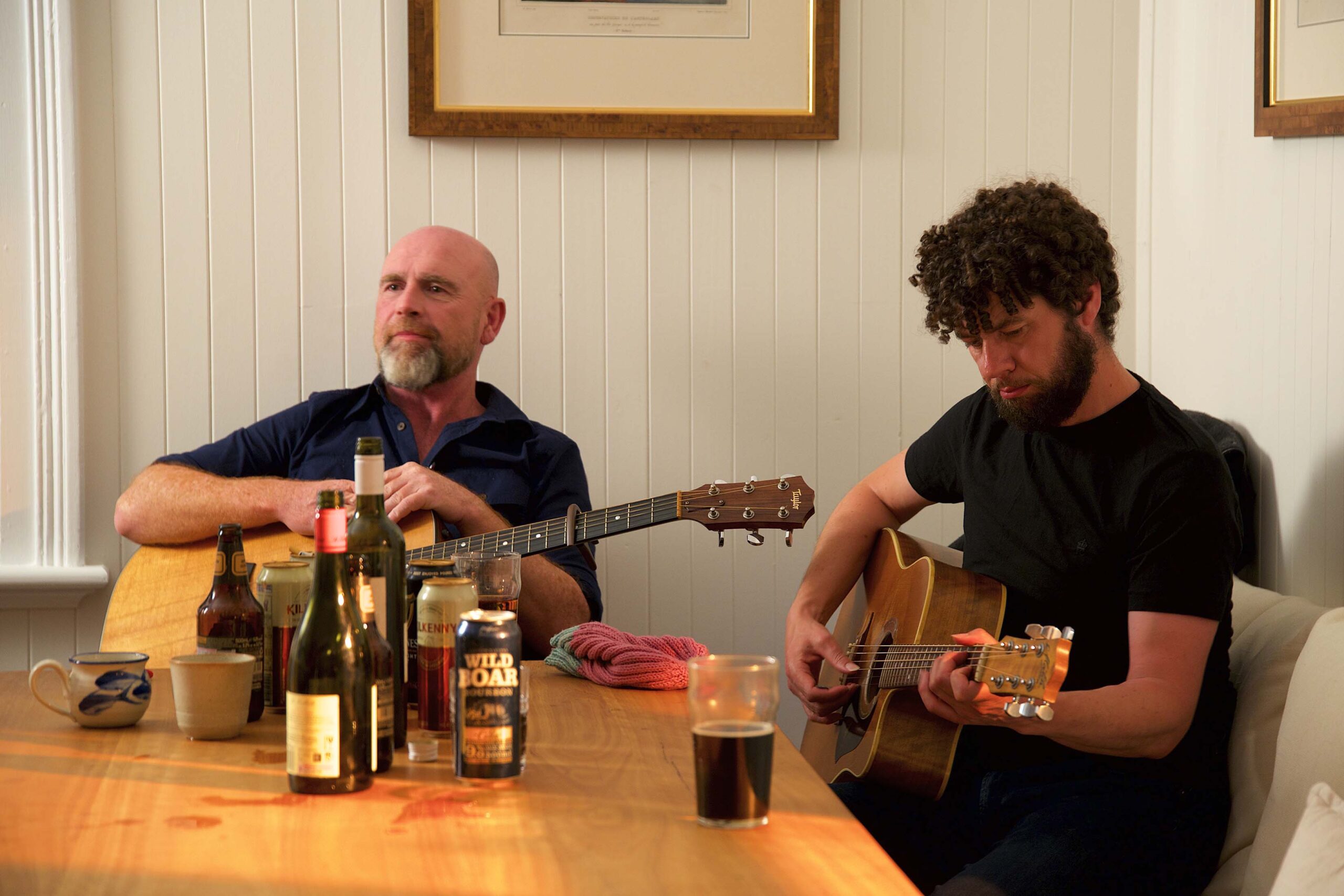
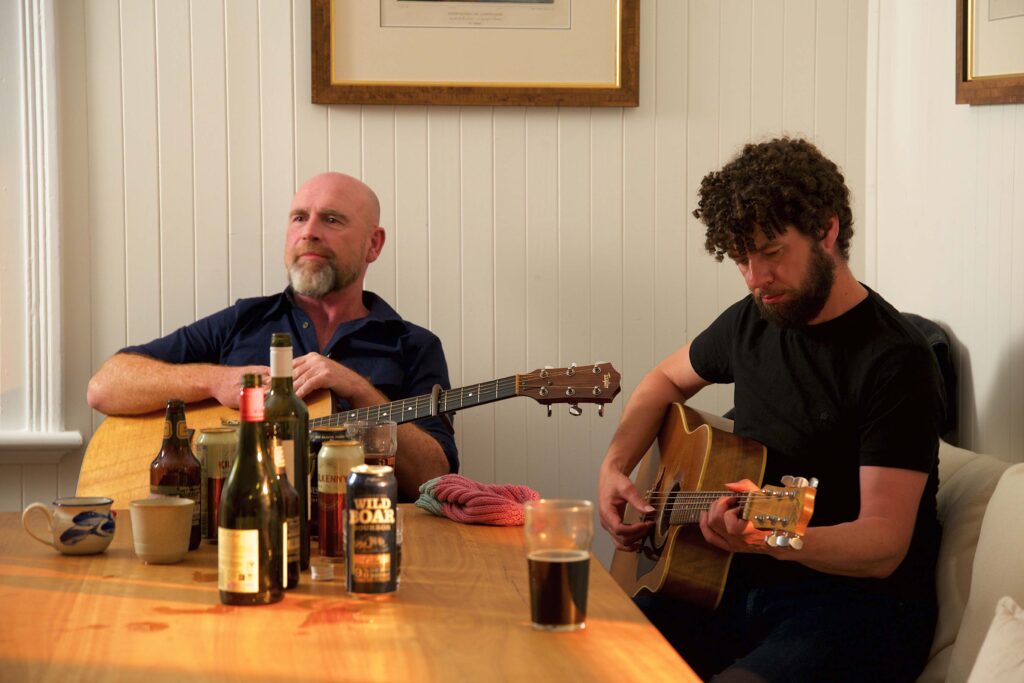
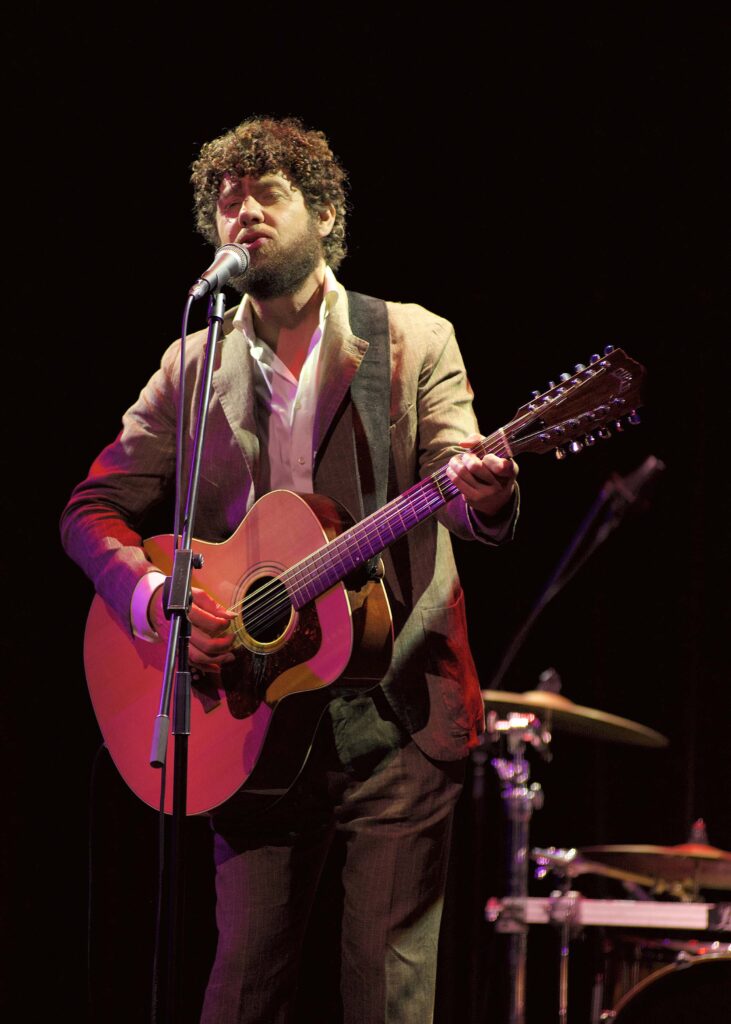
The music of acclaimed Irish singer-songwriter Declan O’Rourke plays an important role in ALMOST WITH YOU, with nine of his songs featured in the film.
O’Rourke’s music is particularly suited to a story like this. His songwriting combines storytelling with melodies that can feel intimate and deeply personal with a timeless quality, drawing on folk and singer-songwriter traditions while remaining distinctly his own.
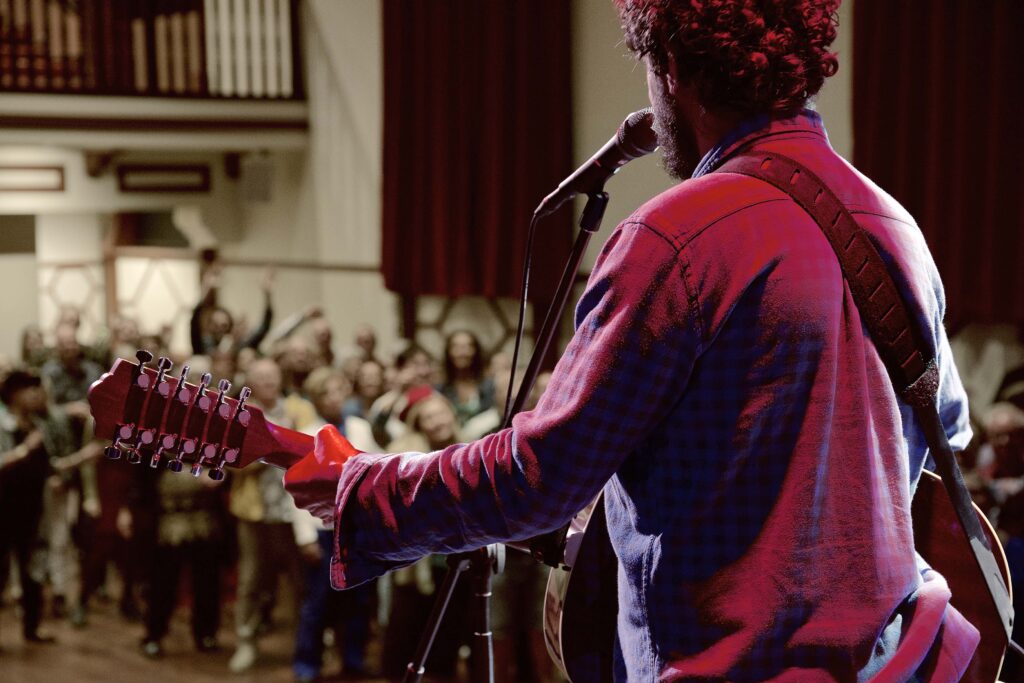
Rather than choosing songs simply because they sounded right for particular scenes, the music becomes connected to Brendan’s character and emotional journey. A few of these songs are also performed live within the film and this can make a difference. When a character actually performs a song on screen, the audience isn’t just listening to soundtrack music. We are watching a performance happening within the character’s world. The lyrics, the voice and even the pauses can become part of the scene.
For a film centred on a musician who has lost some of his connection with performing, that gives the music an additional emotional weight.
Luka Bloom and the musical language of the film
Alongside O’Rourke’s songs is the work of another highly regarded Irish singer-songwriter and musician, Luka Bloom.
Bloom composed instrumental music and lent his beautiful song Front Door Key as the theme song to ALMOST WITH YOU, providing another musical layer to the film. Where a song has lyrics to communicate ideas and emotions, an instrumental score can work almost invisibly. Themes can appear, disappear and return in different forms as characters and relationships develop.
This interplay between songs and instrumental music gives ALMOST WITH YOU two complementary musical voices. O’Rourke’s songs belong closely to Brendan and the world of the performing singer-songwriter. Bloom’s instrumental compositions can move around that world, supporting the landscape, relationships and quieter emotional moments of the story.
Both also bring a distinctly Irish musical sensibility to a story unfolding thousands of kilometres away in Western Australia. That meeting of Ireland and Australia is an important part of the film’s identity given the writer Adam Morris’s connection to his home country and the country he has really made home and guess what, he’s another musician too.

Australia has a wonderful tradition of music and movies
Australian filmmakers have often understood just how powerful the right music can be.
Think of Muriel’s Wedding, where the music of ABBA is far more than a collection of catchy songs. Muriel’s love of ABBA becomes part of her identity, her fantasy world and ultimately her journey towards understanding herself.
Or The Adventures of Priscilla, Queen of the Desert, where songs including disco and pop classics became inseparable from the film’s flamboyant visual world. Decades later, hearing some of those songs can immediately bring scenes from the movie back to mind.
Australian cinema has also produced memorable original scores.
Peter Weir’s Picnic at Hanging Rock, for example, uses haunting music to deepen the mystery and otherworldliness of the Australian landscape. The Piano, filmed in New Zealand but made by Australian filmmaker Jane Campion, demonstrates another approach again: Michael Nyman’s piano music isn’t merely accompaniment music, it is fundamental to the central character’s means of expression. And in films such as Bran Nue Dae, music becomes an even more explicit storytelling device, carrying narrative, humour, culture and character.
These films are very different, but they demonstrate the many jobs music can perform in cinema.
Music can give a landscape its own emotional character
This becomes particularly interesting when a movie has a strong sense of place. Albany and the surrounding Great Southern region aren’t simply backdrops in ALMOST WITH YOU. The landscape is part of the experience of Brendan’s unexpected five days away from the familiar rhythm of touring.
Wide landscapes, the ocean, quiet streets and intimate interiors all create different emotional spaces. Music can connect those spaces and we know Albany has a strong musical heritage .
A musical theme heard in one place and repeated somewhere else can create a connection without the film ever needing to explain it. In the same way, silence can become enormously powerful when a film has established a strong musical presence.
Sometimes choosing not to use music is as important as choosing the music itself.
Why do we remember movie music for so long?
Perhaps one reason music and movies make such powerful partners is that both are closely connected with memory. We can hear a song years after seeing a film and suddenly remember a character, a scene or even how we felt when we first watched it.
The reverse happens too. A film can introduce us to a song or musician we hadn’t previously known, and from then on that music carries the memory of the movie with it. The best film music doesn’t compete with the story. It becomes part of it.
That’s very much the philosophy behind the music of ALMOST WITH YOU. With Declan O’Rourke’s songs woven into Brendan’s story and Luka Bloom’s music helping shape the film’s emotional landscape, music isn’t there simply to fill the silence. It is another voice in the film. And for a story about a musician trying to find his way back to something he has lost, it’s difficult to imagine telling it any other way.